October 30, 2026
Why a Local Pizza Restaurant Beats Fast Food Every Time
By @milogebe053


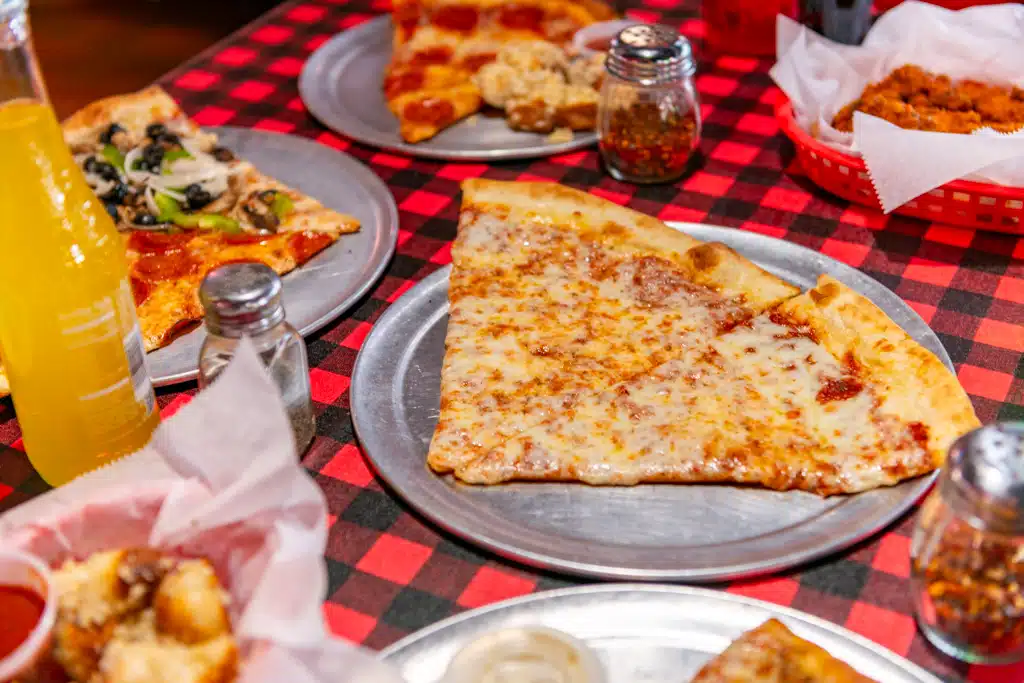
There is a reason people remember the neighborhood pizza place from childhood, yet struggle to recall the last forgettable burger they grabbed through a drive-thru. The difference is not nostalgia alone. It is quality, pace, craft, and the simple fact that a local pizza restaurant tends to treat food like a meal rather than a transaction.
Fast food built its reputation on speed and predictability. That model works when you are in a rush, low on options, or feeding a car full of tired kids after a late practice. But if the question is which experience delivers more satisfaction, better value, and food you actually want to finish, the local pizza restaurant wins more often than not.
That edge shows up in ways people notice immediately, such as aroma, crust texture, sauce balance, and portion quality. It also shows up in less obvious ways, like ingredient sourcing, staff accountability, menu flexibility, and the role a restaurant plays in its community. When you stack the two side by side, the gap is wider than many people think.
The food starts from a different philosophy
Most fast food chains are designed around standardization. That is their strength. Every step is engineered so a meal can be assembled quickly, with minimal variation, in thousands of locations. Ingredients are selected not just for taste, but for shelf life, transport durability, and consistency across markets. A lot of food service operations need some degree of that discipline, but there is a trade-off. The menu often becomes a product of logistics before it becomes a product of appetite.
A local pizza restaurant usually works from a different set of priorities. The dough may be mixed in-house each morning or proofed for a day or two to develop flavor. The sauce may be seasoned with restraint instead of sugar-loaded to satisfy the broadest possible palate. Cheese is chosen for melt and stretch, yes, but also for flavor. Vegetables are cut that day. Sausage may come from a nearby butcher, or a trusted regional supplier that still tastes like real meat rather than a generic filling.
You can taste that difference even if you do not have technical words for it. A good crust has character. It can be crisp at the edge, tender inside, and slightly chewy where it counts. It smells like toasted flour and fermentation, not just browned oil. The sauce supports the pie instead of flooding it. Toppings feel intentional. Even a plain cheese slice can tell you whether the kitchen cares.
That matters because pizza is deceptive. It looks simple, but simple foods leave nowhere to hide. If the dough is weak, you notice. If the cheese is oily, you notice. If the oven timing is off by a minute, you notice. Fast food can cover a lot with sauces, salt, and packaging. A local pizza restaurant lives or dies by the basics.
Freshness is not a marketing line when you can see it happening
One of the great advantages of a neighborhood restaurant is transparency by proximity. You walk in and can often watch part of the process. Dough balls sit stacked in proofing trays. A cook stretches a skin by hand. Someone grates cheese, ladles sauce, and slides a pie into a deck oven. Even if the kitchen is partially hidden, the rhythm of the place tells you the food is being made rather than assembled.
That visual matters because freshness is easy to claim and harder to fake. At a https://fernandogjih921.currentvale.com/posts/how-to-find-a-pizza-restaurant-that-uses-fresh-dough-daily local pizza restaurant, the evidence is often right there in front of you. The basil is bruised because it was just torn. The mushrooms still hold their shape because they were not sitting in a heated pan for an hour. The crust blisters because high heat met live dough, not a preformed shell.
I have seen this play out in busy lunch service. A customer orders a slice from a display pie and another customer across the counter orders a whole pie with a topping adjustment. The slice is reheated properly, the whole pie is made to order, and both leave the kitchen with more attention than a typical chain meal receives from start to finish. That level of care is not romantic fiction. It is the operational reality of many well-run independent restaurants.
There are exceptions, of course. Some local places cut corners, and some national chains maintain surprisingly tight standards. But on average, if you care about food that feels alive rather than processed, the independent pizza shop has the upper hand.
The value equation is better than people assume
Fast food has long marketed itself as the cheap option, and at first glance it often is. A combo meal looks inexpensive on a board or app, especially when the deal is engineered to push one specific bundle. But real value is not just the sticker price. It is what you get, how filling it is, how long it satisfies you, and whether you feel like you ate an actual meal.
A large pizza from a local shop can feed several people with less waste and more flexibility than multiple individual fast food orders. Families know this intuitively. Instead of buying four separate meals, each with fries, drinks, and add-ons, they can order two pizzas, maybe a salad, and feed everyone without crossing into absurd territory on the bill. Leftovers also hold well, which cannot be said for many fast food items that go limp and stale within half an hour.
Value shows up in portion integrity too. A slice of pizza is substantial in a way that a thin sandwich or a handful of nuggets often is not. Even when the total ticket is slightly higher, the meal tends to feel more complete. You are paying for ingredients and labor, not just packaging and advertising overhead.
The strongest local restaurants also understand price sensitivity. They run lunch specials, family bundles, slice deals, and weekday promotions because they know their customer base personally. Not through data dashboards alone, but through actual observation. They know Tuesday is slower. They know the high school team comes in after away games. They know which neighborhoods order early and which wait until eight-thirty. That practical knowledge often produces better value than a national discount campaign.
Customization is real, not superficial
Fast food menus often promise customization, but it is usually limited to subtraction. Hold the pickles. Extra sauce. No onions. The structure of the kitchen discourages meaningful variation because speed depends on tight repetition.
At a local pizza restaurant, customization is often built into the craft. That starts with size and crust style, then moves into sauce choices, cheese blends, topping combinations, bake level, and finishing touches. Want half mushroom and half pepperoni for two kids who never agree on anything else? Easy. Need one pie with no cheese and extra vegetables for a dairy-free guest? Usually possible. Prefer your crust well done because you hate a pale center? A good shop can do that without blinking.
This flexibility matters more than people think. Group dining is rarely simple. Families have different tastes. Office orders get messy. Dietary needs are real. Pizza handles these variables gracefully, especially when the people making it are empowered to solve problems instead of follow a rigid script.
A neighborhood operator also has a strong incentive to remember repeat preferences. After a few visits, staff may know you like light cheese, extra oregano, or your slices reheated longer than average. That kind of memory turns a meal into a relationship. Fast food apps may remember your order too, but digital recall is not the same as a person caring enough to get it right.
The dining experience feels human
There is a sensory difference between sitting in a local pizza restaurant and eating in most fast food spaces. The room sounds different. The smell is better. The pace is more forgiving. Instead of bright menu boards pushing bundles and timers driving turnover, you get the low-level hum of an actual restaurant trying to feed people well.
That matters whether you dine in or take out. If you eat on site, a pizza place invites conversation. A pie arrives in the center of the table, and people share. There is a natural pause while slices cool enough to pick up. Kids negotiate over the last piece. Someone folds a slice, someone else eats with a knife and fork, and an entirely unnecessary argument breaks out over pineapple. The meal has texture in every sense of the word.
Fast food, by contrast, is optimized to keep everything moving. There is nothing inherently wrong with that. It serves a purpose. But the environment often reinforces haste. You order quickly, eat quickly, and leave quickly. The food supports that rhythm because it was designed for it. A local pizza restaurant gives you room to slow down.
Even takeout tends to feel better. Carrying home a hot pizza in a box has a certain ceremony to it. The steam escapes when you crack the lid. The smell fills the kitchen. People gather before the box even lands on the counter. That shared anticipation is part of the value, and it is not something a paper sack on the passenger seat can quite match.
Quality control is personal when the owner lives nearby
In large chains, accountability often travels through layers. A district manager answers to a regional manager, who answers to a corporate structure with its own priorities. Standards exist, but they are abstracted. The person making your lunch is usually not the person setting the vision, and definitely not the person whose name is on the building.
At a local pizza restaurant, quality control is often direct and immediate. The owner may be in the kitchen, at the register, or checking pies before they go out for delivery. If a crust is underbaked, there is no need for a customer complaint to climb through a support portal. Someone sees it and remakes it. If the Friday night rush gets chaotic, the people responsible feel the pressure in real time because these are their regulars, their reputation, and their week on the line.
That kind of ownership changes behavior. It encourages practical pride. Independent restaurant operators know that one bad pie can cost them a family that orders every Friday. They also know one good recovery, handled honestly, can earn loyalty for years. That is why many neighborhood shops are surprisingly generous when they make a mistake. They understand the lifetime value of trust, even if they would never use that phrase.
Better ingredients often mean better digestion and satisfaction
People do not always connect how they feel after eating with the quality of the meal itself. They may just say one food sits better than another. Often that comes down to balance, freshness, and formulation.
A well-made pizza from a good local restaurant can be rich without being punishing. The crust has structure, the sauce has acidity, and the toppings taste like themselves. Because the components are more distinct, the meal can feel cleaner and more satisfying. You stop when you are full, not when you are oddly overstuffed yet still unsatisfied.
Fast food often chases hyper-palatable intensity. Salt, sugar, fat, crunch, and sauce stack on top of each other in ways that light up appetite but do not necessarily produce comfort afterward. That is not universal, but it is common. Many people know the sensation of finishing a quick meal and immediately wanting a drink, a nap, or both.
A pizza restaurant can overdo it too. Heavy cheese, thick processed meats, and poor dough handling are not exactly gentle. But when the shop is good, the ingredients work together instead of bludgeoning your palate into submission.
Local restaurants anchor neighborhoods in ways chains rarely do
Food is never only food. The places we eat shape the places we live. A local pizza restaurant often becomes a neighborhood landmark because it is woven into everyday life. It sponsors youth teams, donates to school raffles, stays open after the parade, and remembers families as they grow. The walls collect history without trying.
When you spend money there, more of it circulates locally. Staff live nearby. Suppliers may be regional. The owner pays local taxes, supports nearby businesses, and hires people who know the area. This does not make every independent restaurant virtuous by default, but it does mean your dinner can reinforce the local economy rather than flow mostly outward.
That community role becomes especially visible during difficult periods. Storms, road closures, school disruptions, and hard economic stretches reveal which businesses are truly embedded. Time and again, neighborhood restaurants adapt fast because they understand their customers beyond market segments. They know who needs a quick family meal, who tips well because they can, and who just had a rough week.
A chain can serve a town. A local pizza restaurant often belongs to it.
Speed is the one category fast food owns, but even that advantage is narrower now
It would be unfair to pretend fast food has no strengths. Its core promise is convenience, and when you need food in minutes, that matters. If you have ten minutes between errands, or you are on the highway with no time to spare, drive-thru speed can be decisive.
But that advantage has narrowed. Many pizza restaurants now offer online ordering, accurate pickup windows, curbside handoff, and efficient delivery systems. If the shop is well run, ordering a pie ahead can be nearly as easy as using a fast food app, especially for households planning dinner rather than making an impulse stop.
The key difference is that pizza rewards a small amount of planning. If you order twenty to thirty minutes ahead, you often get a much better meal with only a modest increase in wait time. For families, that trade is usually worthwhile. So for office lunches, casual gatherings, or a quiet night at home.
There are a few moments when fast food still makes more sense:
- You need something immediately and cannot wait more than a few minutes.
- You are traveling in an unfamiliar area with limited local options.
- You need individual meals for people with completely unrelated preferences.
- It is very late, and the only open kitchens are chain operations.
Those cases are real, but they are narrower than the category's marketing suggests. For most normal meal decisions, a pizza restaurant competes far better on convenience than it did twenty years ago, and still wins on quality.
Pizza handles real life better than fast food does
One of pizza's quiet strengths is how well it fits the way people actually eat. Not idealized lifestyles, real ones. Busy weeknights. Birthday parties. Game nights. Team dinners. Last-minute guests. Family movie nights where nobody wants to cook but everyone still wants to feel like they had dinner together.
Fast food is built around individual ordering. That creates friction in group situations. Somebody wants a sandwich, somebody else wants nuggets, somebody forgets the sauces, somebody's fries are cold before everyone else gets their bag. The meal fragments. By the time it reaches the table, it already feels slightly tired.
Pizza travels differently. It is naturally communal, compact, and forgiving. It stays warm. It portions cleanly. It accommodates different appetites without anyone having to overthink. One person takes one slice, another takes three, and nobody needs a spreadsheet to split the order.
A strong pizza restaurant also gives you options around the edges. Maybe there is a crisp salad, a plate of wings, garlic knots, or baked pasta for the one person who is not in a pizza mood. Those additions complement the meal instead of competing with it. Fast food sides often feel like fillers. Restaurant sides feel like part of dinner.
Craft shows up in the details people remember
Ask people to describe a favorite pizza place and they rarely start with price. They talk about the crust blistering at the edge. The slight char on the bottom. The cheese pull. The pepperoni cups that crisp at the rim. The smell when the box opens. The guy at the counter who has worked there for fifteen years and always throws in extra napkins without being asked.
That is the thing fast food struggles to replicate. Efficiency can create reliability, but it does not create attachment on its own. A local pizza restaurant earns loyalty through detail and repetition. It gives people specific memories, and specific memories are what bring them back.
That does not mean every neighborhood shop is magical. Some are average. Some lean too heavily on reputation and let standards slip. But when a local pizza restaurant is good, it wins by combining skill, hospitality, and familiarity in a way that large systems rarely match.
Here is where that edge usually shows most clearly:
- The crust has a distinct texture and flavor, not just a structural role.
- Ingredients taste separate and fresh instead of blending into one salty note.
- Orders can be adjusted without the whole system breaking down.
- The meal works for groups, leftovers, and repeat occasions.
- The experience feels personal, from the counter to the box.
Those are not small advantages. They define whether a meal feels replaceable or worth seeking out again.
When the better choice is also the more satisfying one
The case for a local pizza restaurant is not built on sentimentality. It is built on the practical realities of eating well. Better ingredients matter. Fresh dough matters. Flexible ordering matters. Human service matters. So does the pleasure of sitting down to food that was made by people who expect to see you again.
Fast food will always have its place. It solves a certain kind of problem quickly. But when the goal is an enjoyable meal, something shareable, and value that extends beyond the receipt, the local pizza restaurant comes out ahead. Not occasionally, not by a razor-thin margin, but most of the time.
That is why people build traditions around pizza places. They celebrate there, recover there, stop in after games, pick up dinner on rough Tuesdays, and keep returning long after trendier options come and gone. A good local shop does more than feed hunger. It becomes part of the weekly rhythm of life.
And that is something no drive-thru can package.
❧